
D E K M A N T E L 2 0 2 5
Renowned for its forward-thinking curation and uncompromising audio fidelity, Dekmantel Festival transforms the Amsterdamse Bos into a singular sonic environment.
This series records my first encounter with that landscape. Utilizing the immediacy of a point-and-shoot camera, the images eschews standard festival documentation to focus on scenes and textures—isolating the moments where the industrial precision of the sound systems intersects with the organic atmosphere of the park.
On day 1, Palms Trax (Left) and Floating Points (right) played a 10 hour set together at the Greenhouse stage using Floating Points’ custom designed Sunflower Sound System. Their marathon set consisted of all kinds of sounds from old disco vinyl records to contemporary electronic music. This was my favorite set of the festival, the combination of a custom high-fidelity sound system and the greenhouse’s enclosed atmosphere created a magnetic, inescapable energy that was hard to step away from.
Set against the treeline of the Amsterdamse Bos, the Selectors stage is defined by its organic architecture and extended length sets. The setting provided the perfect backdrop for the patient, euphoric house selections of Ogazón, Shanti Celeste, and DJ Dustin b2b Fred P.
One of Dekmantel’s core values is sustainability, the festival’s culinary program is entirely vegetarian and vegan. The quality of the food was exceptional, and every dish was prepared fresh on-site. This was the second best festival food I’ve ever had. While the wood fired pizza was a popular central feature, my personal favorites were the kimchi burger stand and the dedicated coffee bar.
DJ Nobu commanding the iconic Radar stage—the visual centerpiece of Dekmantel’s online presence. Formerly defined by partnerships with platforms like Boiler Room and HÖR, the stage has evolved into an independent, three-tier structure that retains a surprisingly intimate energy. As the only space on-site broadcasted globally, it remains a focal point of the festival, often reaching capacity during peak performances.
The final glow of daylight fading as the day comes to an end. Because Dekmantel takes place in early August, the sun doesn't fully set until 10:00 PM, leaving just one hour of darkness before the strict 11:00 PM curfew. While necessary to protect the park’s wildlife, this brief window of time offers only a glimpse of the stages at their full potential, a moment when Dekmantel’s technical precision and minimalist lighting design truly take over.
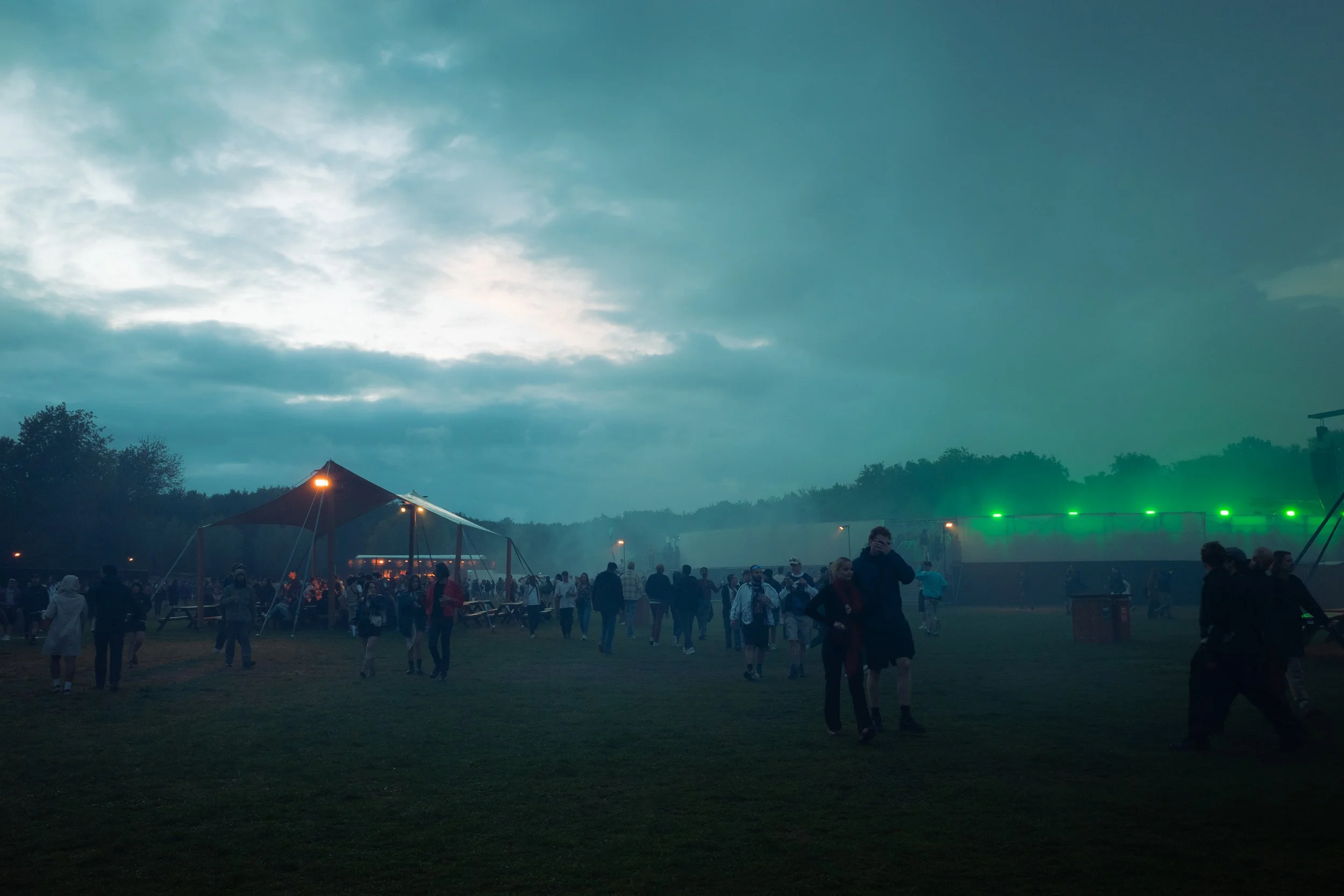
The Loop (Dekmantel’s mainstage) serves as the festival’s architectural centerpiece. Designed with a strictly egalitarian approach, it offers two levels of general access with zero VIP segregation or digital screens. Defined by minimalist lighting and precision audio, the stage creates an immersive atmosphere where the music takes absolute precedence.
The final moment’s of Call Super’s set as he passes it off to Honey Dijon. Call Super’s set was my favorite of the weekend and during the last hour or so of it started raining, but not an unbearable amount and it added to the vibes of the festival.
Left: The interior lighting of UFO I’s stage design. Right: Exterior of UFO II stage structure. These two stages feature techno djs and live acts, with UFO II featuring some of the more left-field sounds of techno.
The final ritual of the weekend: the mass exodus by bicycle. A uniquely Dutch conclusion to Dekmantel, as the majority of attendees navigate the path from the Amsterdam Bos back to the city center.